1

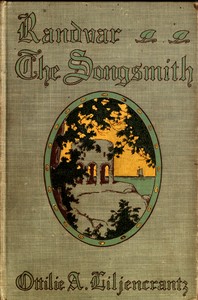
Randvar the songsmith — Edition Insights
439
14
Project Gutenberg
2023
Historical fiction; Discoveries in geography -- Fiction; America -- Discovery and exploration -- Fiction; Northmen -- Fiction; Norumbega (Legendary place) -- Fiction
Readers of public-domain and historical texts
Project Gutenberg digital edition
en
Edition facts
Words: 75,239
Reading time: 328 min
Text sections: 26
Source:
Project Gutenberg record #70472
In Ottilie A. Liljencrantz's romance of Norumbega, the songsmith Randvar navigates love, pride, and rivalry among Norse explorers in a legendary land, where a single smile or scowl can shift allegiances and threaten banishment.
Editorial Edition Score
4.8/5
★★★★★
★★★★★
Calculated from edition completeness, EPUB availability, text structure and catalogue metadata. Not a user rating.
Edition quality
The story opens with Randvar the Songsmith caught between his pride and his love for the Jarl's sister, a tension that drives much of the early action. When she passes him in a hall, he curses her vanity and his own heart, wearing "the rut deeper between his heavy brows with scowling." The narrative voice is sharp and immediate, favoring vivid gestures—a flung door, a fox-skin curtain, a mock salute—over exposition. Liljencrantz builds the world through small, telling details: the "smoke-blackened pillar" that hides Randvar, the "purple, fur-edged" mantle that signals the lady's rank, and the way onlookers scramble to their feet in "rough homage." These concrete observations ground the romance in a tactile, early medieval setting.
Pride and Posture in the Hall
The excerpt from Chapter 26 shows how heavily the story relies on physical posture and gesture to convey emotion. Randvar's bitterness is read through his scowl and the way he stands behind a pillar; his rival Olaf's fury is measured by the veins showing "white on purple" on his forehead. The Jarl's sister enters with her head carried "even more than its wonted haughtiness," and the page Eric announces her with a flourish. These are not neutral descriptions—they are loaded with social meaning. The hall becomes a stage where every bow, every hand on a sword-hilt, every sweeping cap is a move in a game of status and desire. Liljencrantz often lets the action speak louder than dialogue: when Randvar offers a mock salute and folds his arms in the formal sign of peace, the threat is unmistakable. The reader is left to infer the unspoken rules of honor and banishment that govern these encounters.
The Songsmith's Double Bind
Randvar is introduced as a man caught between two impulses: his love for the Jarl's sister and his pride, which he calls a curse "worse than Helvin's." The narrative gives us his internal cry—"I would give all I own in the world had I not known how to smile!"—but then immediately shows him smiling in malicious enjoyment at Olaf's anger. This contradiction is central to his character. He is a songsmith, a maker of words and music, yet in this scene he is nearly speechless, communicating through mockery and silence. The other characters, like Bolverk and Mord the Grim, serve as a chorus, commenting on the action and reminding Randvar (and the reader) of the stakes: starting a fight means outlawry. The tension is not just romantic but legal and social; Randvar's emotions are constantly checked by the threat of exile. The excerpt does not reveal whether he will break free of this bind, but it establishes the pattern of restraint and eruption that likely drives the plot.
Voices of the Norse World
Liljencrantz populates her hall with a range of voices that give texture to the setting. The hunters and traders speak in colloquial, sometimes ironic tones: "Every man to his taste!" says Bolverk, while the loungers raise "a chorus of disappointment" when Olaf is dragged away. The page Eric speaks in a "young treble," and Mord the Grim expostulates shrilly. These are not interchangeable voices; each has a distinct register. The author also uses the framing poems by Longfellow and Whittier to evoke a legendary Norse past, but the prose itself is more immediate and earthy. The dialogue is peppered with threats and boasts—"want the Songsmith's head for a hand-ball"—that recall the saga tradition. Yet the narrative voice remains controlled, often ironic, observing the characters' posturing with a cool eye. This blend of saga-style bravado and novelistic interiority gives the romance its particular flavor: heroic in scale but intimate in focus.
Readers should attend to the way Liljencrantz uses the hall as a microcosm: every entrance, every gesture, every whispered comment carries weight. The romance is as much about the performance of honor as it is about love. Pay attention to the recurring motifs of smiling and scowling, of hands on sword-hilts and caps swept in mockery—they are the vocabulary of this world. The excerpts offer only a glimpse of Randvar's journey, but they suggest a story where the songsmith's art may be his only escape from the traps of pride and desire.
Reader reflection
How will you remember this book?
Save your reaction, strongest insight, and memorable passage.
Your progress
0
/
10
2
Did this book hold your interest?
3
Would you encourage someone else to read it?
4
How much effort did this book require?
5
How clearly were the main ideas presented?
6
What did you think about the pace?
7
How useful were the ideas in this book?
8
Which part made the strongest impression?
9
In one sentence, what did you learn?
10